
Suriname’s offshore oil ambitions: navigating human rights, climate change commitments and the risk of ecocide
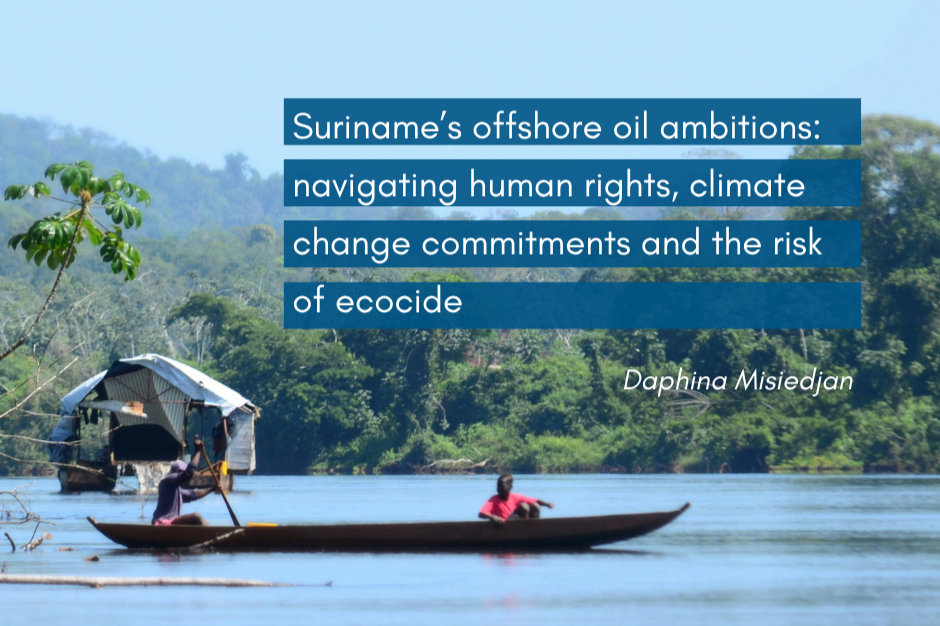
Photo by Anoeskha B on Unsplash
Three more articles from our upcoming Special Issue of the International Journal of Human Rights on ecocide, human rights and environmental justice, have now been published!
This week we will highlight all of them starting today with what might be the least known country of South America and one of the few carbon negative countries in the world: Suriname.
In Suriname’s offshore oil ambitions: navigating human rights, climate change commitments and the risk of ecocide, Daphina Misiedjan, Ph.D. examines how Suriname stands at a critical crossroads. While offshore oil development offers major economic opportunities, it also poses serious risks to fragile marine ecosystems, low-lying coastal regions, and Indigenous communities.
Drawing on the 2007 Saramaka People v. Suriname judgment, Misiedjan highlights the need for free, prior and informed consent (FPIC), benefit sharing, and strong Environmental and Social Impact Assessments (ESIAs). She argues that stronger environmental governance and ultimately the criminalisation of ecocide could help close enforcement gaps and protect both people and ecosystems from severe harm.
Read the full article here: Suriname’s offshore oil ambitions: navigating human rights, climate change commitments and the risk of ecocide