
The Promise Institute
for Human Rights (Europe) News

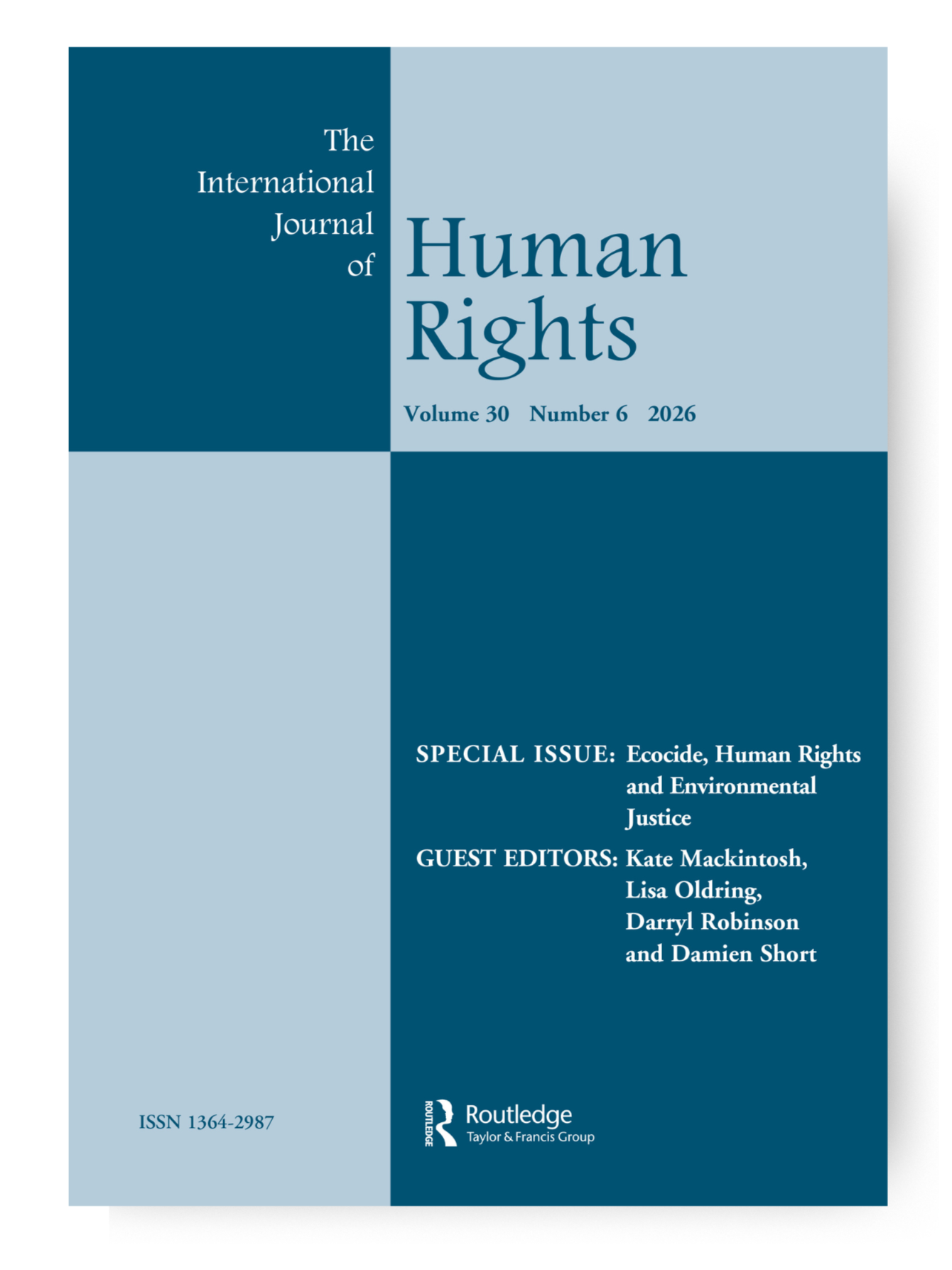
We are excited to share the newly released Special Issue of The International Journal of Human Rights on Ecocide, Human Rights and Environmental Justice, edited by Kate Mackintosh, Lisa Oldring, Darryl Robinson and Damien Short.
The Special Issue emerges from a sustained conversation that has developed alongside the remarkable growth of scholarship, advocacy and law reform concerning ecocide over recent years.
The origins of this collection lie in the 2023 symposium convened by UCLA Law's The Promise Institute for Human Rights (Los Angeles), "An International Crime of Ecocide: New Perspectives", which brought together scholars from a wide range of disciplinary and geographical perspectives to explore the legal, philosophical and political questions raised by the emergence of ecocide as a proposed international crime.
Many of those early conversations have matured into the articles published here.
The articles are arranged around three themes: Corporations, Colonialism and Indigenous struggle; Accountability and Repair: Defining Justice for Ecocide and Human Rights and Environmental Stewardship. The collection serves as a resource for the scholars, advocates, practitioners and policymakers who are shaping the emerging field of ecocide law and the overarching challenge of environmental justice.

🌍 Understanding the Elements of Ecocide Law: A Seven-Part Series 🌍
Part 2: The Definition of Environment
As ecocide encompasses harm to the environment, the definition of environment governs what kinds of harm can be criminalized. While there is no accepted definition of the environment in international law, the International Expert Panel for the Legal Definition of Ecocide follows the language of the Environmental Modification Convention to define the “environment” as “the earth, its biosphere, cryosphere, lithosphere, hydrosphere and atmosphere, as well as outer space”.
The International Law Commission and the International Committee of the Red Cross both consider that the concept of the environment includes both human and natural elements as they constitute a complex system of interconnections that cannot be treated as discrete.