
The Crime of Ecocide Through Human Rights: Towards Environmental Protection and Justice
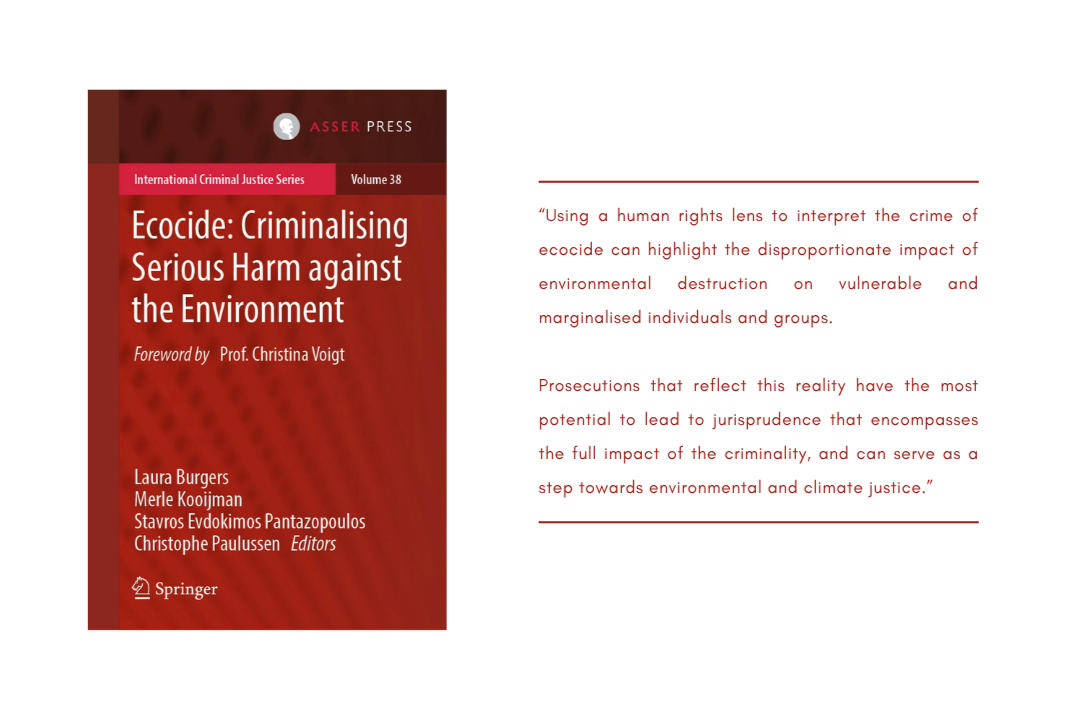
We are delighted to share the publication of the edited volume Ecocide: Criminalising Serious Harm against the Environment (T.M.C. Asser Press / Springer Law, 2026), edited by Christophe Paulussen et al. Our senior fellow Lisa Oldring and executive director, Kate Mackintosh contributed Chapter 5, The Crime of Ecocide Through Human Rights: Towards Environmental Protection and Justice.
In this contribution, Lisa and Kate note that adding ecocide to the ICC Statute would place it among the most serious crimes of concern to the international community, adding to recognition of the triple planetary crisis of climate change, biodiversity loss, and pollution as one of the greatest threats to human rights.
They present two ways a human rights approach can help shape the definition of ecocide in ways that support the ultimate goals of prevention, protection, and justice.
🌿 First, a human rights approach offers clarity on the standards of conduct expected of states and companies. The international human rights system has helped to develop these standards in relation to environmental destruction and climate change, offering important procedural and substantive guidance that can inform the elements of the crime, in particular around issues of fault or foresight.
🌿 Second, a human rights approach puts affected people at the centre and highlights the disproportionate impacts of environmental harm on marginalised and disempowered populations. This approach can help ecocide prosecutions reflect the full impact of the harm, and has the most potential to generate awareness, accountability and protection for all victims, tracing a path towards environmental and climate justice. The book is available on the website of the Asser Institute.