
The Promise Institute
for Human Rights (Europe) News

We are excited to share the newly released Special Issue of The International Journal of Human Rights on Ecocide, Human Rights and Environmental Justice, edited by Kate Mackintosh, Lisa Oldring, Darryl Robinson and Damien Short.
The Special Issue emerges from a sustained conversation that has developed alongside the remarkable growth of scholarship, advocacy and law reform concerning ecocide over recent years.
The origins of this collection lie in the 2023 symposium convened by UCLA Law's The Promise Institute for Human Rights (Los Angeles), "An International Crime of Ecocide: New Perspectives", which brought together scholars from a wide range of disciplinary and geographical perspectives to explore the legal, philosophical and political questions raised by the emergence of ecocide as a proposed international crime.
Many of those early conversations have matured into the articles published here.
The articles are arranged around three themes: Corporations, Colonialism and Indigenous struggle; Accountability and Repair: Defining Justice for Ecocide and Human Rights and Environmental Stewardship. The collection serves as a resource for the scholars, advocates, practitioners and policymakers who are shaping the emerging field of ecocide law and the overarching challenge of environmental justice.
Manual on Prosecuting International Environmental Crimes
The manual lays out the legal architecture for prosecuting environmental destruction as an international crime, and shows how to apply this in practice.
It offers a step-by-step guide to what can be done within existing legal frameworks, while building the practical foundations any future law will also require. The manual provides prosecutors and investigators confronting unlawful environmental destruction, in any jurisdiction and in war or peace, with practical frameworks for identifying, framing, and building cases. It includes five case studies that illustrate real-world, present-day examples of environmental crime.
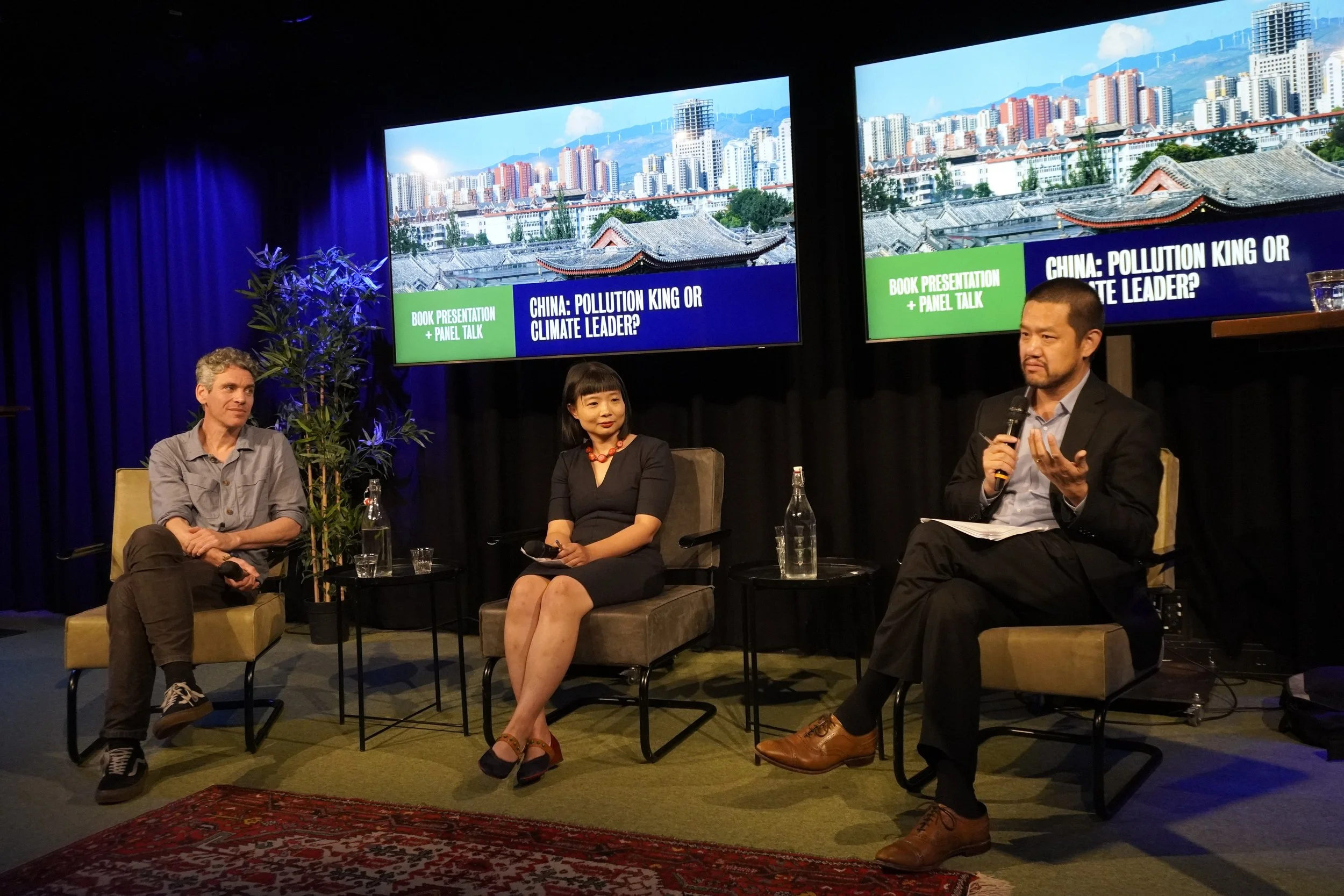
UCLA Law Prof. Alex Wang visits Amsterdam and The Hague
Last week, our affiliated faculty Prof. Alex Wang visited us for three events hosted by the Leiden Asia Centre, the University of Amsterdam's interdisciplinary institute SEVEN, and cultural debate centre Pakhuis de Zwijger in Amsterdam.
A huge thank you to China experts Prof. Shiming The discussions centred on the themes of Alex's newly published book Chinese Global Environmentalism (Cambridge University Press, 2026) — exploring how China has shifted from being seen as an environmental laggard to making its green ambitions a pillar of global power, and what that means for international governance, geopolitics, and development cooperation.

EU Environmental Crime Directive Deadline: Which States Are Ready?
The EU Environmental Crime Directive deadline is here! Are we ready?
As of the 21st of May 2026, EU member states must have the Environmental Crime Directive transposed into national law, with new criminal offences, tougher penalties, and a qualified offence for the most catastrophic harm: destruction so widespread and irreversible it reaches the level of ecocide.

Chinese Global Environmentalism - UCLA Law Prof. Alex Wang visits The Netherlands
In the race to save the planet, Beijing is moving at a speed the West can’t match. China the world’s biggest polluter, has rapidly transformed into its greatest green hope, rewriting the rules of the climate fight through sheer, top-down force.
From enormous solar power farms to the total domination of the electric vehicle market, the ‘Green Dragon’ is outpacing us all.
Humans Matter Too!
The third in the series of new articles from our upcoming Special Issue of the International Journal for Human Rights on Ecocide, Human Rights and Environmental Justice, is certainly not the least. In his article, Darryl Robinson, Professor of Law at Queen's University, challenges a fundamental misunderstanding that has taken hold in Ecocide scholarship.
Much of the academic literature has treated any consideration of human well-being as inherently "anthropocentric" and therefore suspect. Robinson argues this is simply wrong.
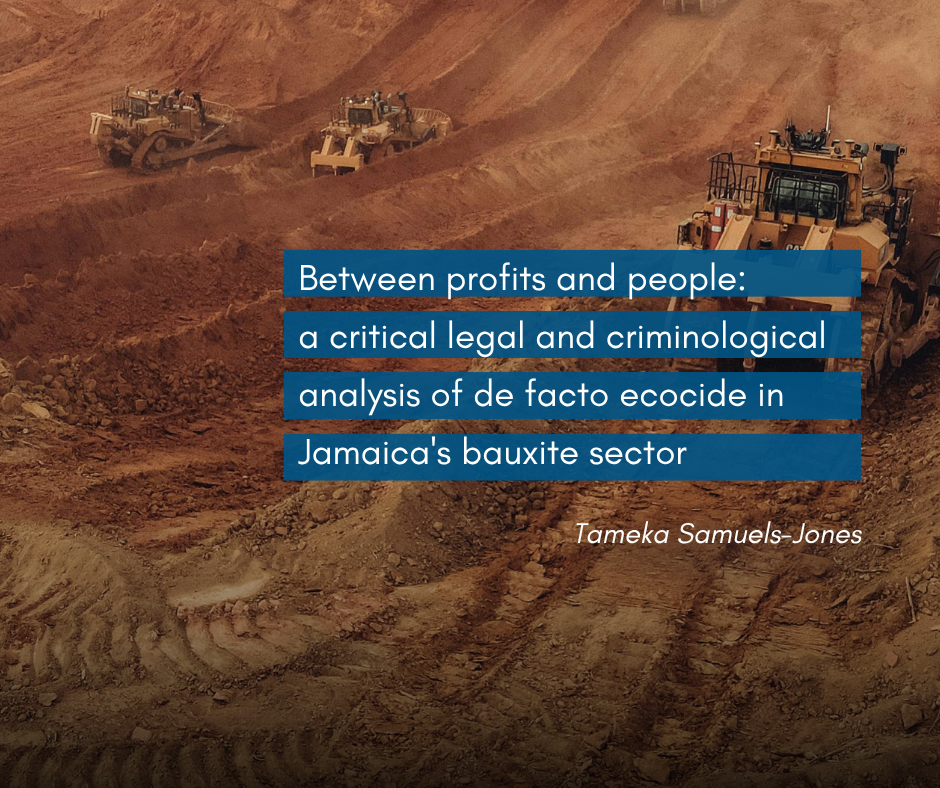
Between Profits and People: A Critical Legal and Criminological Analysis of De Facto Ecocide in Jamaica’s Bauxite Sector
This article examines how Jamaica, as a Small Island Developing State (SIDS), faces disproportionate environmental harm from resource extraction by multinational corporations, compounded by climate-related disasters such as the devastating Category 5 Hurricane Melissa in 2025.
Against the backdrop of the absence of ecocide as a codified international crime and Jamaica not being a State Party to the ICC, Dr. Samuels-Jones explores how systematic environmental destruction, conceptualised as de facto ecocide, can be legally addressed.
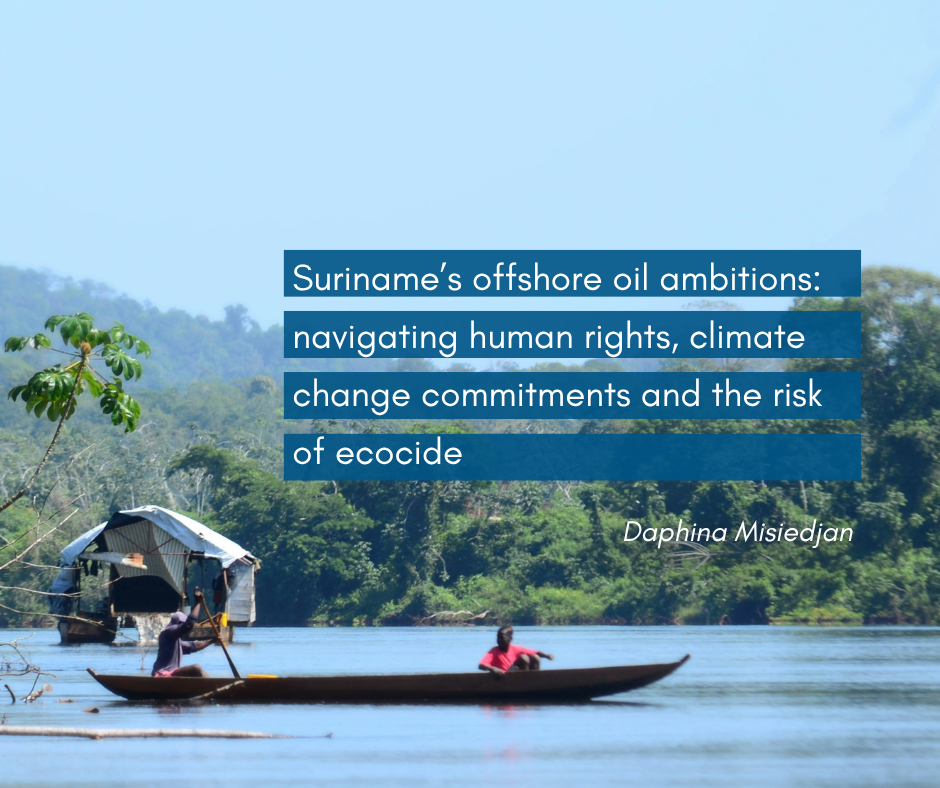
Suriname’s offshore oil ambitions: navigating human rights, climate change commitments and the risk of ecocide
In Suriname’s offshore oil ambitions: navigating human rights, climate change commitments and the risk of ecocide, Daphina Misiedjan, Ph.D. examines how Suriname stands at a critical crossroads.
While offshore oil development offers major economic opportunities, it also poses serious risks to fragile marine ecosystems, low-lying coastal regions, and Indigenous communities.

Amicus Brief on Carbon Markets to the African Court of Human and Peoples’ Rights
Experts and researchers from The Promise Institute, along with colleagues from Climate Counsel, Sudan Human Rights Hub, and SOMO, have submitted an amicus brief to the African Court on Human and Peoples’ Rights on the human rights impacts of carbon markets in the context of climate change.
Carbon offset projects in Africa are often presented as a climate solution: turning forests, soil, and land into carbon credits that can be sold to offset emissions elsewhere. In reality, many of them are deeply flawed, and our submission raises urgent concerns.
The Crime of Ecocide Through Human Rights: Towards Environmental Protection and Justice
We are delighted to share the publication of the edited volume Ecocide: Criminalising Serious Harm against the Environment (T.M.C. Asser Press / Springer Law, 2026), edited by Christophe Paulussen et al. Our senior fellow Lisa Oldring and executive director, Kate Mackintosh contributed Chapter 5, The Crime of Ecocide Through Human Rights: Towards Environmental Protection and Justice.

Hadar Harris is the new ED of our Los Angeles Office!
We are thrilled to welcome Hadar Harris to The Promise team!
Hadar is a longtime advocate for justice, equity, and human rights. She will join The Promise Institute for Human Rights at UCLA as executive director of our Los Angeles location. Her appointment marks a homecoming to UCLA Law, where she earned her J.D. and founded the school’s first ACLU chapter!

Pro Bono - First UN Report on the Right to Sanitation
Earlier this month, 11 UCLA Law students met with UN Special Rapporteur on the Right to Water and Sanitation, Mr. Pedro Arrojo-Agudo, and his legal team. Under the guidance of UCLA Law alum and our Legal Advisor, Amanda Brown, they began research for his upcoming report to the UN General Assembly on the human right to sanitation without discrimination. As all previous reports have focused on the right to water, this will be the first time that this aspect of the mandate is addressed by the Special Rapporteur.
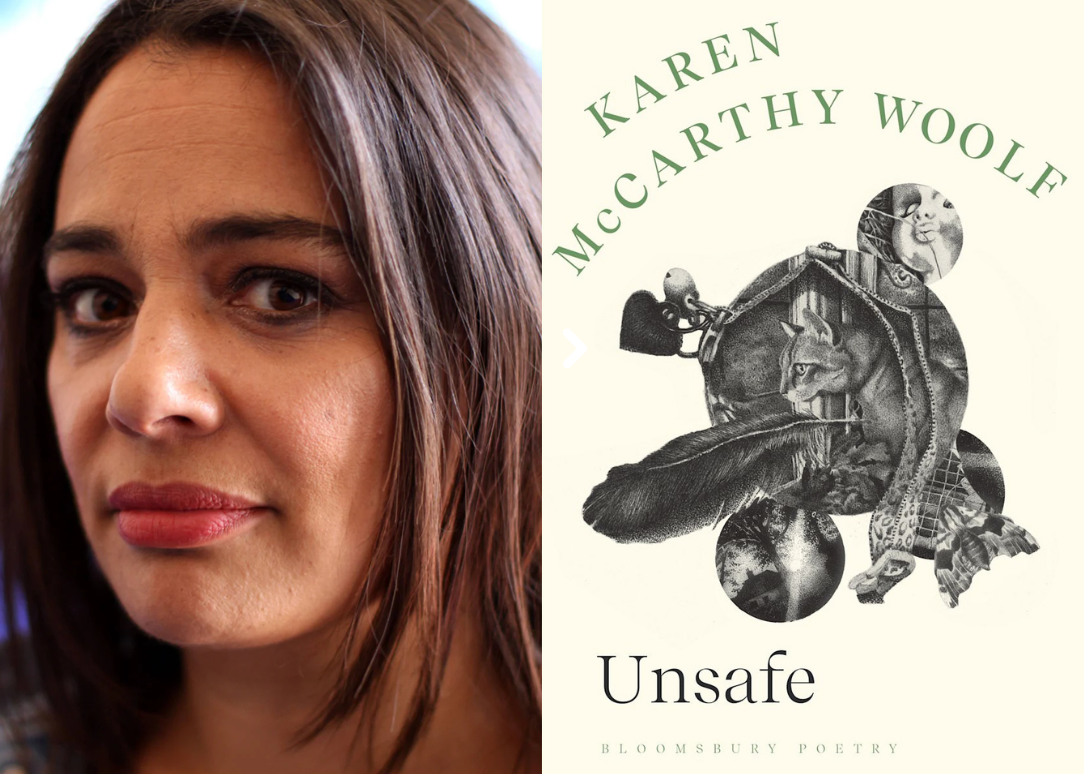
Unsafe - A 21st Century Poetry of Witness
Karen McCarthy Woolf’s new poetry collection Unsafe, published in February 2026, by Bloomsbury, brings together work developed during her residency at The Promise Institute for Human Rights at UCLA School of Law in 2019 and 2020.
As a disenchanted walk through London and Los Angeles, Unsafe shows the effects of capitalism on those who live at its sharp end. It is an immersive meditation on place, the body, nature, and the self, drawing the reader into processes of gentrification and economic disparity, often through unexpected lenses – from trees and tattoos to the totemic qualities of cats.
Ecocide Law Bibliography Highlight
A new article has been published in our Special Edition of the International Journal of Human Rights on Ecocide, Human Rights and Environmental Justice!
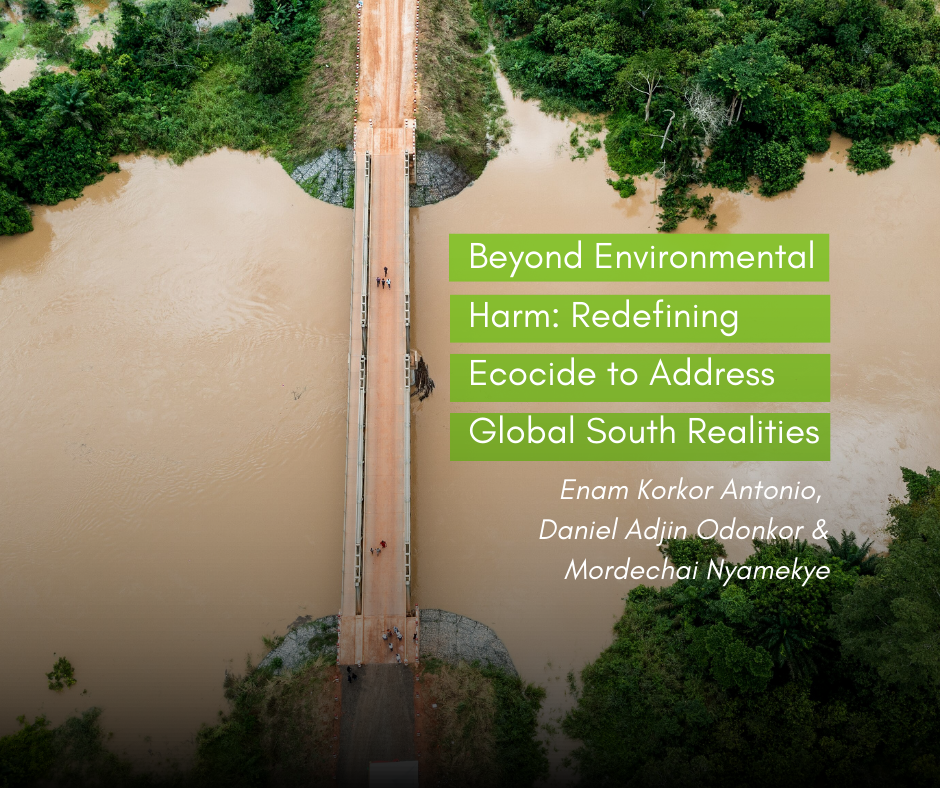
Enam Korkor Antonio, Daniel Adjin Odonkor & Mordechai Nyamekye’s article Beyond Environmental Harm: Redefining Ecocide to Address Global South Realities through Ghana’s Illegal Mining Crisis argues that current definitions of ecocide inadequately address the environmental and socio-economic realities of the Global South.
Using Ghana’s illegal gold mining (galamsey) crisis as a case study, the authors propose an expanded definition that includes harm to human livelihoods, health, and fundamental rights.
Judging International Justice Lecture with Judge Dire Tladi
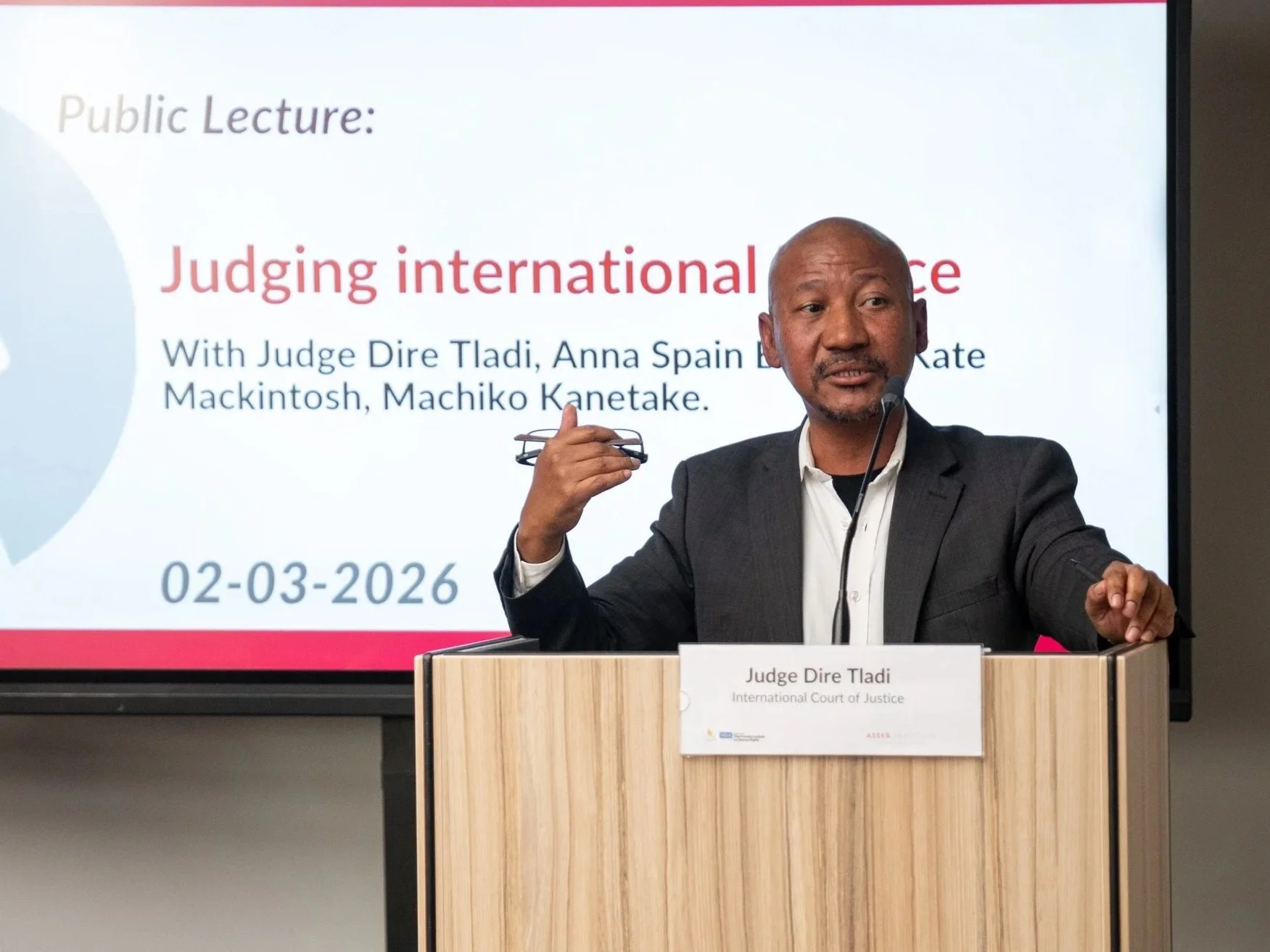
It was a full house for The Promise Institute for Human Rights at UCLA’s 2nd Annual Judging International Justice Lecture featuring the Honorable Dire Tladi, Judge at the International Court of Justice at the T.M.C. Asser Institute on Monday.
In his lecture, Judge Tladi examined the role of the International Court of Justice and the contours of its function.
He reflected on the interpretation of concepts of jus cogens and erga omnes, situating them within current discussions about the meaning and continued relevance of international legal institutions in a time marked by multiple conflicts and challenges to international agreements.

Critical Race Theory and the Law of the Sea: Bringing CRT ‘Offshore
Our legal associate Amanda Danson Brown’s article “Critical Race Theory and the Law of the Sea: Bringing CRT ‘Offshore’” has been published in the peer-reviewed SOAS Journal of Postgraduate Research.
Amanda Brown observes that while critical scholars have increasingly encouraged bringing Critical Race Theory (CRT) approaches into international law, this expansion has largely stopped at the shoreline; the international law of the sea (ILOS) remains conspicuously absent from this global turn.

Scotland votes to advance the Ecocide Bill
We congratulate Monica Lennon, the Scottish Parliament, and the people of Scotland on the vote to advance the Ecocide (Scotland) Bill. This is a significant step towards recognising severe environmental destruction as a serious crime and future prevention of such crimes.
This vote marks an important moment for environmental justice and accountability. Scotland is demonstrating clear and principled leadership, both within Europe and globally.

Submission to OHCHR Regarding Nuclear Testing in the Marshall Islands as Existing and Potential International Crimes
Our Legal Associate, Xuchen Zhang, and ED, Kate Mackintosh, have submitted a brief to the Office of the High Commissioner for Human Rights in response to its Call for Input on addressing the challenges and barriers to the full realization of the human rights of the people of the Marshall Islands stemming from the State’s nuclear legacy.

Judging International Justice - Judge Dire Tladi Lecture in The Hague
Make sure to join us for a timely and reflective lecture by Dire Tladi, Judge of the International Court of Justice, for the second Judging International Justice Lecture series from The promise Institute for Human Rights at UCLA.
This lecture offers an opportunity to hear directly from a sitting international judge on the role, responsibilities, and limits of international adjudication today. Drawing on his experience as judge, scholar, and former government adviser, Judge Tladi will reflect on how international courts engage with complex global challenges, and how legal reasoning is shaped by institutional mandates, historical context, and evolving international realities.
Whoever Rules the Waves Rules the World: Sea Power and the Law of the Sea
We are pleased to share a newly published paper by Kal Raustiala, The Promise Institute Distinguished Professor of Comparative and International Law, 𝘞𝘩𝘰𝘦𝘷𝘦𝘳 𝘙𝘶𝘭𝘦𝘴 𝘵𝘩𝘦 𝘞𝘢𝘷𝘦𝘴 𝘙𝘶𝘭𝘦𝘴 𝘵𝘩𝘦 𝘞𝘰𝘳𝘭𝘥: 𝘚𝘦𝘢 𝘗𝘰𝘸𝘦𝘳 𝘢𝘯𝘥 𝘵𝘩𝘦 𝘓𝘢𝘸 𝘰𝘧 𝘵𝘩𝘦 𝘚𝘦𝘢, which is out in the American Journal of International Law this month.
Conference Report and Recordings are online!
Across three panels, Corporations and Colonialism; Accountability and Repair: Defining Justice for the Crime of Ecocide; and Human Rights and Environmental Stewardship, speakers explored ecocide through a human rights lens, offering a wide range of perspectives on how severe environmental harm intersects with human rights and how international law can be used to advance environmental justice. The programme concluded with an evening session focused on diplomacy and activism.
Enjoy dipping into the conference report, the recordings of the event, and the image gallery!